OCBC: A Source of Social Capital
Sociologist Robert Putnam, in his influential book Bowling Alone, argues that one of the greatest challenges facing modern society is the decline of social capital—the networks of trust, mutual support, and meaningful relationships that help individuals and communities flourish. While technology has made communication easier than ever, many people today experience loneliness, isolation, and a weakening sense of belonging.
Perhaps this challenge is even more significant for younger generations. Members of Generation Z have grown up with smartphones, social media, and now artificial intelligence. They are connected to countless people online, yet many still long for face-to-face human relationships, a trusted community, and a deeper sense of purpose. As AI becomes an even greater part of everyday life, the importance of places where people can actually meet, listen, and care for one another will only increase.
At Orange County Buddhist Church, we have the opportunity to cultivate this kind of social capital. Our temple is more than a place for Sunday worship. It is a welcoming community where people of every age and background can discover friendship, compassion, and spiritual support throughout every stage of life—from birth and childhood, to illness, aging, and memorial remembrance.
Grounded in the teachings of Jōdo Shinshū, our community is founded upon the assurance that every person is embraced just as they are by Amida Buddha's immeasurable Wisdom and Compassion. Because we ourselves are accepted unconditionally, we naturally learn to accept and support one another. Trust, reciprocity, kindness, and mutual care are not simply social values; they are expressions of living the Nembutsu together.
One way to understand OCBC is through three interconnected pillars that strengthen both our temple and our wider community.
The first pillar is our Dharma Center and Sangha. Sunday services, mindful meditation, Buddhist Education classes, Dharma School, Jr. YBA, YABA, Dharma Wheel Club, Sangha Teens, BWA, ABA, weddings, funerals, memorial services, and spiritual care all provide opportunities for people to hear the Dharma while supporting one another through life's joys and sorrows. Here we discover that we are never alone.
The second pillar is Culture and Scouting. Programs such as Ikebana, Taiko, Choir, Ukulele, Kimekomi, the Wednesday Craft Group, Boy Scouts, and Girl Scouts, preserve cultural traditions while creating friendships across generations. These activities bring together children, parents, grandparents, and community members who may first come for culture but gradually experience the warmth of the Sangha.
The third pillar is Sports and Wellness. Tai Chi, basketball, pickleball, judo, Tomodachi Bento, BWA Senior Lunch Day, and our social welfare activities promote physical, emotional, and social well-being. These gatherings remind us that caring for one another includes caring for both body and mind, especially during times of challenge or transition.
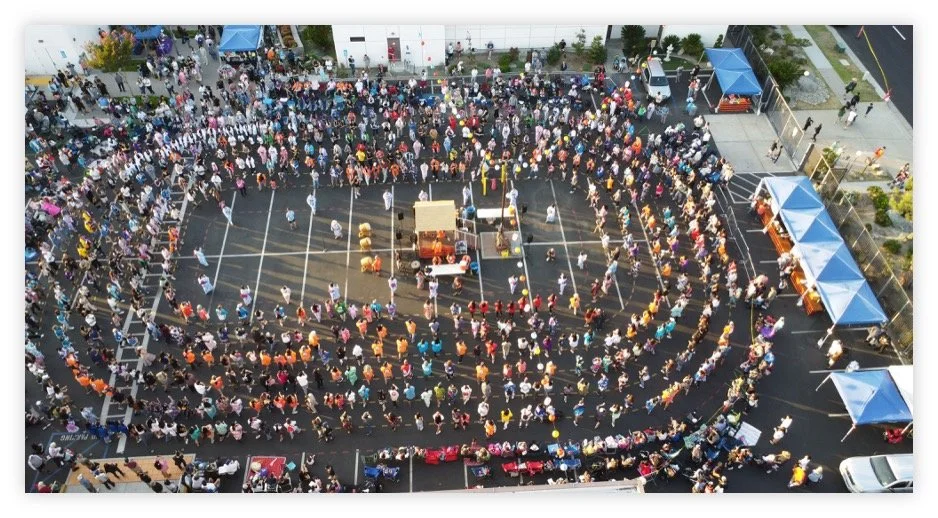
These three pillars create what Putnam describes as both bonding and bridging social capital. Bonding strengthens the relationships within each group as members encourage and support one another over many years. Bridging occurs when these groups interact with one another and welcome newcomers from outside the temple. A Scout family may begin attending a service. A pickleball player may volunteer at Obon. A visitor attending a memorial service may later join a meditation class. In this way, each activity becomes a bridge that connects people to a larger community of compassion.
The Buddha taught that no one exists independently. Our lives are sustained by countless causes and conditions and by the kindness of innumerable people. The Sangha gives us the opportunity to experience this truth, not only as a teaching but as a living reality. Here we laugh together, grieve together, celebrate together, and support one another through every season of life.
As we look toward the future, our mission is not simply to preserve a temple building or continue traditions for their own sake. It is to nurture a compassionate community where every person can experience belonging, trust, and mutual support. In an age increasingly shaped by digital technology and artificial intelligence, this may be one of the greatest gifts a Buddhist temple can offer.
When we realize that we are embraced unconditionally by Amida Buddha and supported by our Sangha, we naturally respond with gratitude and compassion toward others. In this way, OCBC continues to become not only a temple, but a living source of social capital—a community where wisdom, compassion, and human connection flourish together.
