Living in the Last Dharma Age
In this issue, I would like to celebrate the birth of our founder, Shinran Shōnin. The title shōnin means “master” or “revered teacher”; it is not his surname. While we respectfully call him Master Shinran, he himself was never self-important. Rather, he was humble and deeply grounded—a person who lived close to the realities of ordinary life.
Shinran was born on May 21, 1173, in Kyoto, more than 850 years ago. The 12th century was a time of profound transition in Japan, shifting from an aristocratic to a warrior-based society. Natural disasters—earthquakes, droughts, and floods—were frequent. Epidemics spread, and civil conflicts arose. People lived with deep uncertainty, unable to foresee what the next day might bring.
This was understood as the age of mappō, the Last Dharma Age—a time when traditional Buddhist practices were believed to lose their effectiveness. In such an age, people desperately sought a path to inner peace. For them, Amida Buddha’s teaching was truly liberating: it did not depend on difficult monastic disciplines but on the boundless wisdom and compassion that embrace all beings just as they are, without conditions.
Now, in 2026, do we not feel something similar? At times, it may feel as though we are walking through a dense fog, unable to see even a few months ahead. We are constantly surrounded by information—some reliable, some not—and it becomes difficult to find firm ground within ourselves.
Shinran described such a world using the term gojoku (五濁), the “five defilements”:
Impurity of the Age (劫濁, kōjoku): An era marked by disasters, conflict, and instability.
Impurity of Desire (煩悩濁, bonnōjoku): A condition in which greed, anger, ignorance, and doubt dominate our hearts.
Impurity of Living Beings (衆生濁, shujōjoku): A decline in moral and spiritual awareness among people.
Impurity of Views (見濁, kenjoku): The spread of mistaken beliefs and confusion about truth.
Impurity of Life Span (命濁, myōjoku): Shortened lives that make spiritual realization more difficult.
Does this not sound strikingly similar to our present age?
Human Shinran
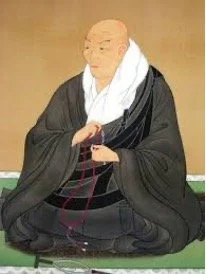
Shinran (1173–1263), the founder of Jōdo Shinshū (True Pure Land Buddhism), stands out in Buddhist history because he openly lived as a human being—embracing marriage and eating meat and fish, while relying entirely on Amida’s compassion. His life reflects a path not of perfection, but of honesty. Let us consider three aspects of “Human Shinran.”
1. Neither Monk nor Layperson
Shinran described himself as hisō-hizoku—“neither monk nor layperson.” After spending twenty years as a Tendai monk on Mount Hiei, he was exiled in 1207 along with his teacher Hōnen, as their Nembutsu teaching drew criticism and opposition. Stripped of his formal monastic status, Shinran did not simply return to lay life. Instead, he lived in a new way—dedicated to the Nembutsu, yet no longer bound by institutional definitions. He saw himself as neither a formal cleric nor an ordinary lay follower, but as a person fully embraced by Amida’s vow.
He even referred to himself as Gutoku Shinran—“the foolish, stubble-haired Shinran.” In this self-description, we see not self-deprecation, but deep spiritual honesty. He recognized his limitations and entrusted himself entirely to Other Power (tariki), the working of Amida Buddha beyond the ego.
2. Marriage (Saitai)
Unlike most Buddhist monks of his time, Shinran married Eshinni and raised a family. This was not simply a personal choice—it reflected a profound vision: that the Buddhist path is for everyday life, not separate from it.
There are traditions suggesting an earlier marriage, but what is most historically grounded is his partnership with Eshinni, with whom he had several children. Their life together, especially during exile in Echigo (present-day Niigata), embodied the reality of family life—joys, hardships, and responsibilities.
A well-known story tells of Shinran’s retreat at Rokkakudō in Kyoto, where he prayed for guidance. In a dream, Avalokiteshvara (Kannon Bosatsu) appeared and affirmed that marriage could be part of his path. When Shinran consulted Hōnen, his teacher simply responded: if it supports your Nembutsu practice, it is acceptable.
Shinran’s marriage later became a foundation for what we now recognize as temple family life. More importantly, it affirmed that awakening is not limited to monastic renunciation, but can be realized within the ordinary relationships of daily life.
3. Meat and Fish Eating (Nikujiki)
Shinran also did not strictly follow the traditional prohibition against eating meat and fish. This, too, reflected his departure from conventional monastic discipline. One story tells that after a memorial service, Shinran was served fish. As he ate while wearing his kesa, a child questioned him: “Isn’t that breaking the precepts?” Shinran replied that he received the meal with gratitude, acknowledging the life given, and recited the Nembutsu, wishing for the fish’s birth in the Pure Land. This story illustrates not carelessness, but mindfulness and compassion. Shinran did not claim moral purity; instead, he lived with awareness of interdependence and gratitude.
Although marriage and meat-eating became more widely accepted among Buddhist clergy after the Meiji Restoration, Shinran lived this way centuries earlier—openly and honestly. While others may have lived similarly in secret, Shinran did not hide his humanity.
Living the Nembutsu as We Are
Shinran did not present himself as an ideal to imitate, but as a fellow traveler—an ordinary person filled with blind passions, yet embraced by boundless compassion. His life teaches us that the path to liberation is not about becoming perfect. Rather, it is about awakening to the reality of our limitations and entrusting ourselves to Amida’s vow.
In this sense, “Human Shinran” is not separate from us. His journey reflects our own lives—filled with uncertainty, imperfections, and longing. And yet, within this very life, we are already embraced.
Namo Amidabutsu.
