Shin Buddhist Myōkōnin: Living the Nembutsu with Heart and Simplicity
1. What is the Shin Buddhist Myōkōnin?
The term Myōkōnin (妙好人), meaning “wondrously good person,” refers in Shin Buddhism to individuals who live with profound faith in Amida Buddha, often without formal education or religious status. The term originates in the writings of the Pure Land master Shan-tao (Zendo) and later came to describe lay followers whose lives shine with the light of the Nembutsu—not through intellectual understanding, but through deep entrusting (shinjin).
Myōkōnin often come from humble backgrounds and may even be overlooked by society. Yet they reveal, through their actions, speech, and spirit, the transformative power of Amida’s Vow. They live not by self-power (jiriki), but by Other Power (tariki), showing us what it means to be embraced by the Buddha’s infinite compassion.
As Shinran Shōnin taught, spiritual awakening is not limited to the learned or devout—it is the foolish, the ordinary, the brokenhearted who are most readily embraced by Amida. The Myōkōnin remind us that the essence of the Dharma is not achievement, but gratitude and entrusting.
2. Voices of the Past: Saichi, Genza, and Okaru
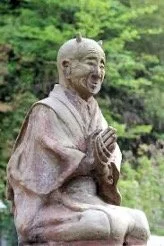
One of the most beloved Myōkōnin is Saichi (circa1922), a woodworker from Japan’s Noto Peninsula. Though largely illiterate, Saichi kept a record of spontaneous poems and reflections—short writings that overflow with gratitude and affection toward Amida Buddha. Addressing Amida like a dear friend or parent, he wrote:
“O Amida, I just go on saying Your Name— That is everything.”
Saichi’s writings express deep joy, sorrow, humility, and even humor, all flowing from his deep entrusting heart. Look at his statue with two horns on top of his head. He asked artist to add them reflecting his real self.
Another well-known figure is Genza, a stonemason known for his blunt, even rough demeanor. Yet his life was marked by compassion and unwavering Nembutsu. When asked why he attended so many funerals, he replied,
“How can I work when people are returning to Amida? I must see them off with the Nembutsu.”
His rough speech was balanced by a tender heart awakened to impermanence. Genza’s awakening happened when he loaded heavy bundles of rice stalks onto the back of his ox “den.” He finally understood inexplainable working of Amida Buddha for him. “Genza-san” anime books (Volume I & II) are available at the BEC Bookstore.

Okaru, a female Myōkōnin from rural Japan, was similarly without formal learning, but radiated care and concern for others. She was a grouchy woman who was often ordering around her husband. He finally gave up and left her. Okaru got upset and talked to a Shin Buddhist Minister. His answer was,
“Glad it happened to you. Now you can deeply listen to the Dharma.”
She offered the Nembutsu on behalf of the sick, the poor, and the forgotten, quietly living the Dharma through simple acts of kindness and devotion.

These individuals show that awakening does not depend on knowledge or appearance, but on the sincere heart that receives Amida’s Vow with joy and humility.
3. Contemporary Myōkōnin: Hisako Nakamura, Wariko Kai, and Takeko Kujo
The spirit of the Myōkōnin did not end in premodern Japan. In modern times, we find luminous examples of Shin faith in the lives of Hisako Nakamura, Wariko Kai, and Takeko Kujo.
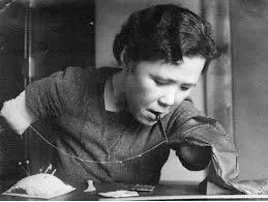
Hisako Nakamura (1897–1968) lost all four limbs to disease as a child. Despite living with severe disability and prejudice, she supported herself as a speaker and shared her gratitude for life and for the Buddha’s compassion. She once said,
“Although I have no arms and legs, how peaceful the day is that I am being wrapped in the Buddha’s sleeves.”
Hisako’s book is also available at BEC Bookstore.
Wariko Kai (1903–1985) was a thoughtful Shin teacher and writer who brought insight into the emotional and relational aspects of Shin faith. She emphasized that true entrusting is not an individual achievement, but a deep relationship—being called by Amida. Wariko worked with Lady Takeko Kujo on developing the Japanese women education system amidst the male-dominated society of the Meiji era, which led to foundation of the Kyoto Women’s University and Girls High School.
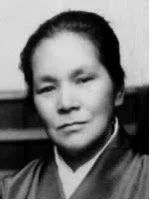
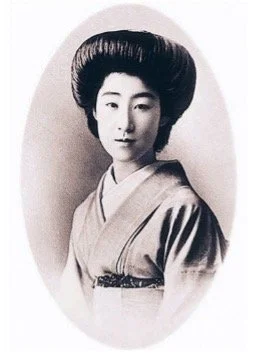
Takeko Kujo (1887–1928), a poet, humanitarian, and devout Shin Buddhist, also embodied the Myōkōnin spirit. She was the daughter of the 21st Gomonshu Myonyo, but never acted as a celebrity. After the Great Kantō Earthquake of 1923, she led major relief efforts for victims and departed to the great nirvana at the age of forty-two. Her poetry reveals a life of deep awareness and service:
“Though the world be steeped in suffering, the voice of the Nembutsu is never far.”
These women, while well-educated and engaged in modern society, carried the same qualities seen in the traditional Myōkōnin—humility, compassion, and joyful entrusting to Amida’s Vow.
Conclusion: The Heart of the Myōkōnin
The Myōkōnin are not saints in the conventional sense. They are ordinary people awakened to extraordinary gratitude. They know their limitations and foolishness—and because of that, they surrender all self-power and entrust themselves fully to Amida Buddha.
In the poems of Saichi, the devotion of Genza, and the compassion of Takeko Kujo, we see the essence of the Shin path: a life lived not for self-perfection, but in joyful response to the boundless compassion that already embraces us.
May their lives remind us to walk our path with the same sincerity, trust, and joy. May we, too, become people of the Nembutsu, nurtured by Amida’s Light.
Namo Amidabutsu
