
Fragrance of Nembutsu
I recently had a chance to watch an interesting program, Fragrances – NHK Japanology Plus, about Japanese kō (香), incense. We are familiar with granulated incense and incense sticks offered at temples and home obutsudan, all made from kō. Yet incense is not simply something burned during rituals. It carries a long cultural, artistic, and spiritual history. This article invites you to appreciate the history and varieties of kō, even its surprising use in contemporary cooking, before turning to Shinran Shōnin’s beautiful teaching of the “fragrance of Nembutsu.”
History of Incense
Incense came to Japan together with Buddhism. In 538 C.E., according to tradition, a Buddhist image and scriptures were presented to the Japanese court from Korea. A few decades later, in 595, fragrant agarwood is said to have drifted ashore on Awaji Island. Villagers discovered its extraordinary aroma when burned and offered it for sacred use.
Since then, aromatic woods were valued in Buddhist rituals for purification and reverence. In 754, the Chinese monk Ganjin (Jianzhen) arrived in Japan and brought medicinal knowledge and ingredients used in incense making.
By the Heian period (794–1185), appreciation of refined fragrance became part of court culture. Aristocrats held gatherings to compare and “listen” to incense, an expression still used today—mon-kō (聞香), literally “hearing incense.” This suggests fragrance is not merely smelled but deeply received.
Later, during the Edo period, the way of incense, Kōdō (香道), developed alongside tea ceremony and flower arrangement as one of Japan’s refined arts. Incense also became widely available among ordinary people through stick incense production.
Ingredients of Incense
Among many ingredients, two especially prized aromatic woods are jinkō (沈香, aloeswood/agarwood) and byakudan (白檀, sandalwood). Agarwood, often from Southeast Asia, forms when a tree produces resin in response to natural injury. Over time, this creates a deep, complex fragrance. The finest quality, called kyara, has been treasured for centuries. Sandalwood, imported from India, Indonesia, and surrounding regions, offers a soft, calming sweetness. It is often used in temple incense and meditation spaces. Other ingredients may include clove, cinnamon, camphor, and herbal spices, blended carefully to create distinctive fragrances.
Kinds of Incense:
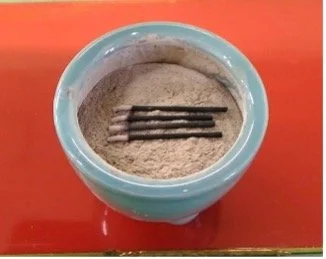
Stick Incense
This is the form most familiar at OCBC and in home altars. It burns evenly and gently releases fragrance over time. In Jodo Shinshu, we traditionally lay incense horizontally rather than standing it upright, with the lighted end placed to one’s left.
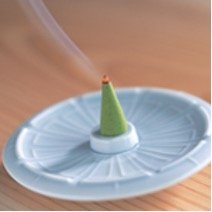
Cone Incense
Cone incense burns more intensely as the wider base is reached, making it suitable for scenting a room in a shorter time.
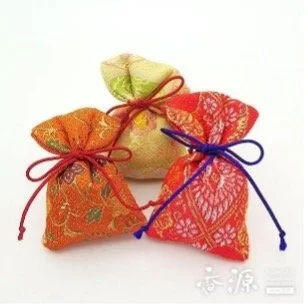
Sachet
Small cloth sachets filled with powdered incense have long been used to scent clothing, drawers, and rooms. Their fragrance is subtle and elegant, quite different from perfume.
In Japan there is even the playful art of identifying fragrances through incense games, reminding us that kō can be both contemplative and joyful.
Koh Flavor in Innovative Cooking
The NHK program also introduced a remarkable restaurant exploring kō as flavor. Distilled aromatic waters from incense woods were infused into dishes and even wine. Though unusual, this reflects something profound: fragrance can be experienced not only in worship but in ordinary life—even through food. Perhaps this reminds us that beauty and awakening are often encountered in unexpected places.
Nembutsu Fragrance
Buddhist sutras often describe the Pure Land as filled with wondrous fragrance, or speak of the Buddha’s teaching itself as carrying aroma. For Shinran Shōnin, this imagery becomes deeply personal. He praises the Nembutsu practitioner in this wasan:
Such beings are like people who, imbued with incense,
Bear its fragrance on their bodies;
They may be called
Those adorned with the fragrance of light.
(Hymns of the Pure Land, #116)
What does this mean?
When someone carries incense, its fragrance naturally clings to their robes. In the same way, those touched by Amida Buddha’s wisdom and compassion naturally bear its “fragrance.” This is not a moral achievement or something we produce ourselves. It is the working of boundless compassion permeating our lives.
Shinran calls it the “fragrance of light”—the light of wisdom that dispels ignorance, and the compassion that never abandons foolish beings like ourselves.
Once this fragrance touches us, it does not leave. It accompanies us wherever we go—in joy and sorrow, in confidence and uncertainty. Even amid the difficulties of ordinary life, this fragrance becomes peace of mind, gratitude, and gentle concern for others.
Perhaps we may think of Nembutsu itself—Namo Amida Butsu—as this invisible fragrance. We may not always notice it, just as we may stop noticing incense after a while, yet it continues to surround and permeate us.
And like fine incense, the fragrance of Nembutsu naturally spreads. A person living in gratitude, humility, and compassion quietly influences others without intending to do so. When we offer incense at the altar, we are not only making an offering to the Buddha. We may also remember Shinran’s insight: we ourselves are being adorned with the fragrance of light.
May we entrust ourselves to this fragrance of Nembutsu and carry its gentle aroma into our everyday lives.
